
Your brake pads press against the rotors every time you slow the car down, and that friction is what stops you. Over time the pads wear thin, and once the material runs out you are left with metal touching metal. That is where the grinding noise comes from, and it means the rotors are likely getting damaged too. Metal on metal contact chews into the rotor surface fast, and the longer it goes on the deeper those grooves get. Pads wear faster if you do a lot of stop and go driving around Phoenix traffic or ride the brakes often in the hills nearby. Short trips with lots of starts and stops wear pads quicker than steady highway miles, so city driving tends to use up a set sooner than you might expect.
Signs You Need Brake Service
- Squealing or screeching when you slow down
- Grinding noise that sounds like metal on metal
- Brake pedal feels soft or sinks closer to the floor
- Car pulls to one side when you brake
- Steering wheel shakes when you stop
- A burning smell after driving downhill or in traffic
The warning signs usually show up before a full breakdown. A squeal is often just a wear indicator doing its job, a small metal tab built into the pad that rubs the rotor on purpose once the pad gets thin, telling you to get it checked soon. Grinding, pulling to one side, or a pedal that feels spongy are bigger red flags, and each one points to a different problem under the hood. A shaking steering wheel when you brake usually points to a warped rotor, not the pads themselves, since an uneven rotor surface makes the caliper pulse against it. None of these fix themselves, and they tend to get worse the longer you drive on them, turning a small fix into a bigger one.
Before we replace anything, we check the pad thickness, look over the rotors for grooves or warping, and inspect the brake lines and calipers for leaks or sticking. We also check brake fluid condition since old fluid can absorb moisture over time and that affects how firm the pedal feels under your foot. This step matters because sometimes what feels like a bad rotor is really a caliper that is not releasing all the way, dragging on the rotor and wearing it down even when you are not pressing the brake pedal. Catching that early changes what actually needs fixing, and it can save a rotor that still has life left in it instead of replacing parts that were never the real problem.
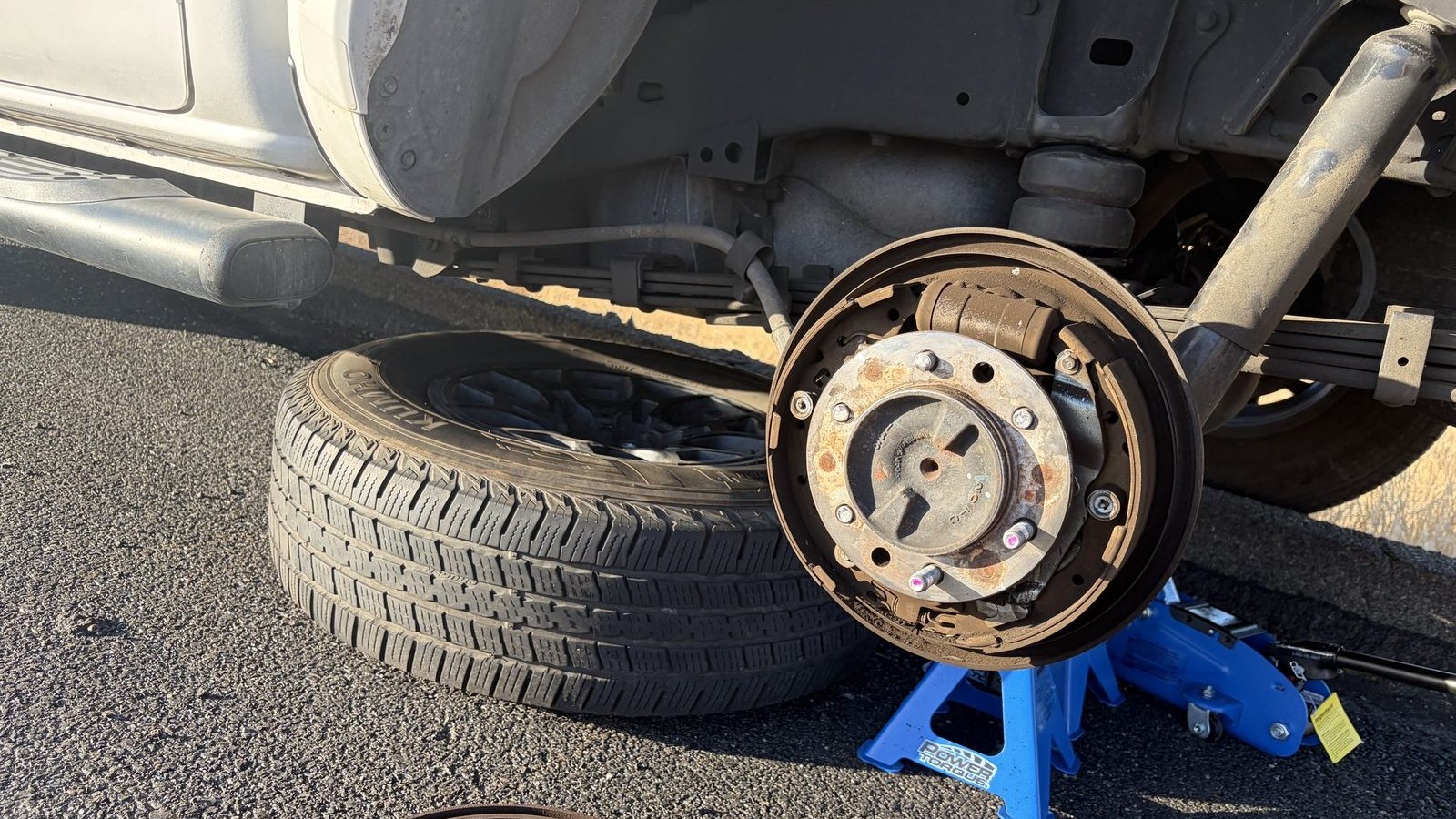

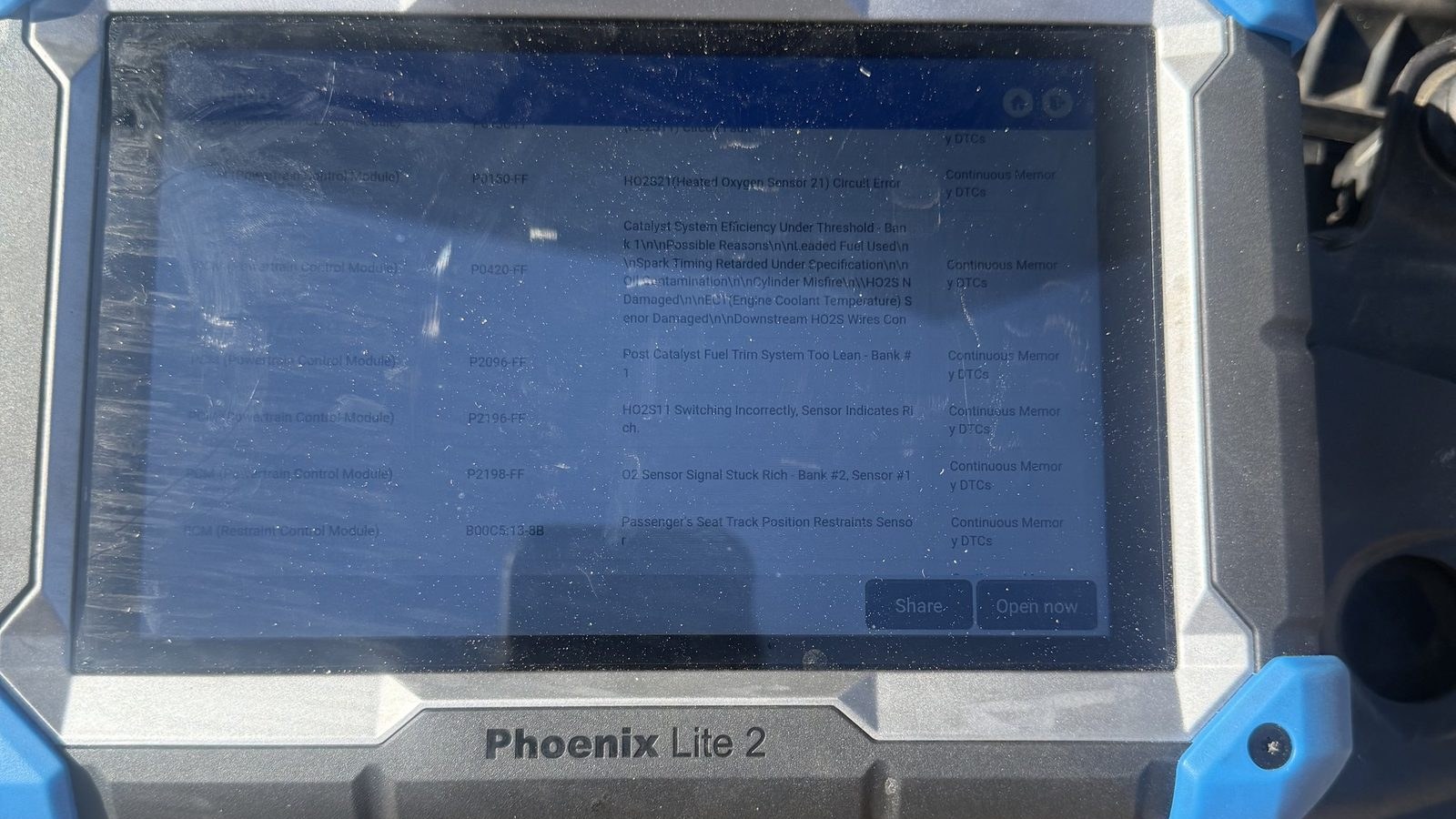
A standard brake service means pulling the wheels, removing the worn pads, inspecting or resurfacing the rotors, and installing new pads built for your vehicle's make and model. We check the calipers move freely on their slides, clean up any rust or debris around the mounting points, and make sure everything torques down to spec so nothing works loose later. Once it is back together we test the pedal feel to check for firmness and take a short drive to confirm the brakes respond right, stop straight, and do not pull to one side before we call it done. That last check matters since a brake job that feels fine sitting in the driveway can still feel off once you are actually moving.
The job gets bigger if the rotors are too worn or warped to resurface and need full replacement instead of just new pads on the old rotors. There is only so much metal on a rotor that can be machined off before it gets too thin to safely handle heat, and past that point replacement is the only option. Leaking calipers or worn brake lines also add to the work since those have to be fixed before new pads will do any good, and ignoring a leak means losing fluid pressure right when you need to stop. A car that has been driven a long time on grinding brakes often needs more parts than one caught early, since the damage spreads from the pads to the rotors and sometimes into the hardware and calipers behind them.
If your brakes are squealing or feel soft, try not to put off a drive across Phoenix or out toward Tempe or Chandler until it gets checked. A soft or spongy pedal often means air or moisture has gotten into the brake lines, and that can mean longer stopping distances right when you need the brakes most. Keep extra following distance, avoid hard stops if you can, and get it looked at as soon as you're able instead of waiting for the noise to go away on its own. Driving on grinding brakes for too long usually turns a simple pad job into a bigger repair involving rotors, calipers, or both.
Brake wear is not always obvious from behind the wheel until it gets loud or the pedal starts to feel different, so it helps to pay attention to small changes early. A pedal that sits lower than usual, a faint grinding sound only at low speeds, or the car drifting slightly to one side under braking are all worth checking out around Phoenix before they turn into something worse. Climate and driving style both play a part too, since stop and go traffic and hot pavement add extra heat and stress to the whole brake system. Staying ahead of wear with regular checks on pad thickness and rotor condition tends to keep the job smaller and the parts list shorter.
What to Tell Us When You Call
- Year, make, and model of your vehicle
- What noise or feeling you're noticing, like grinding or a soft pedal
- When the problem started and if it's getting worse
- Your location in or around Phoenix for the mobile visit
 Supercanic